
from US$22.21
Japan, Ogasawara
Stargazing Tour - Observe the best starry sky in Japan, Ogasawara!
Explore
Explore the profound quiet of the universe through NASA's high-resolution archives. Perfect for your stargazing journey.
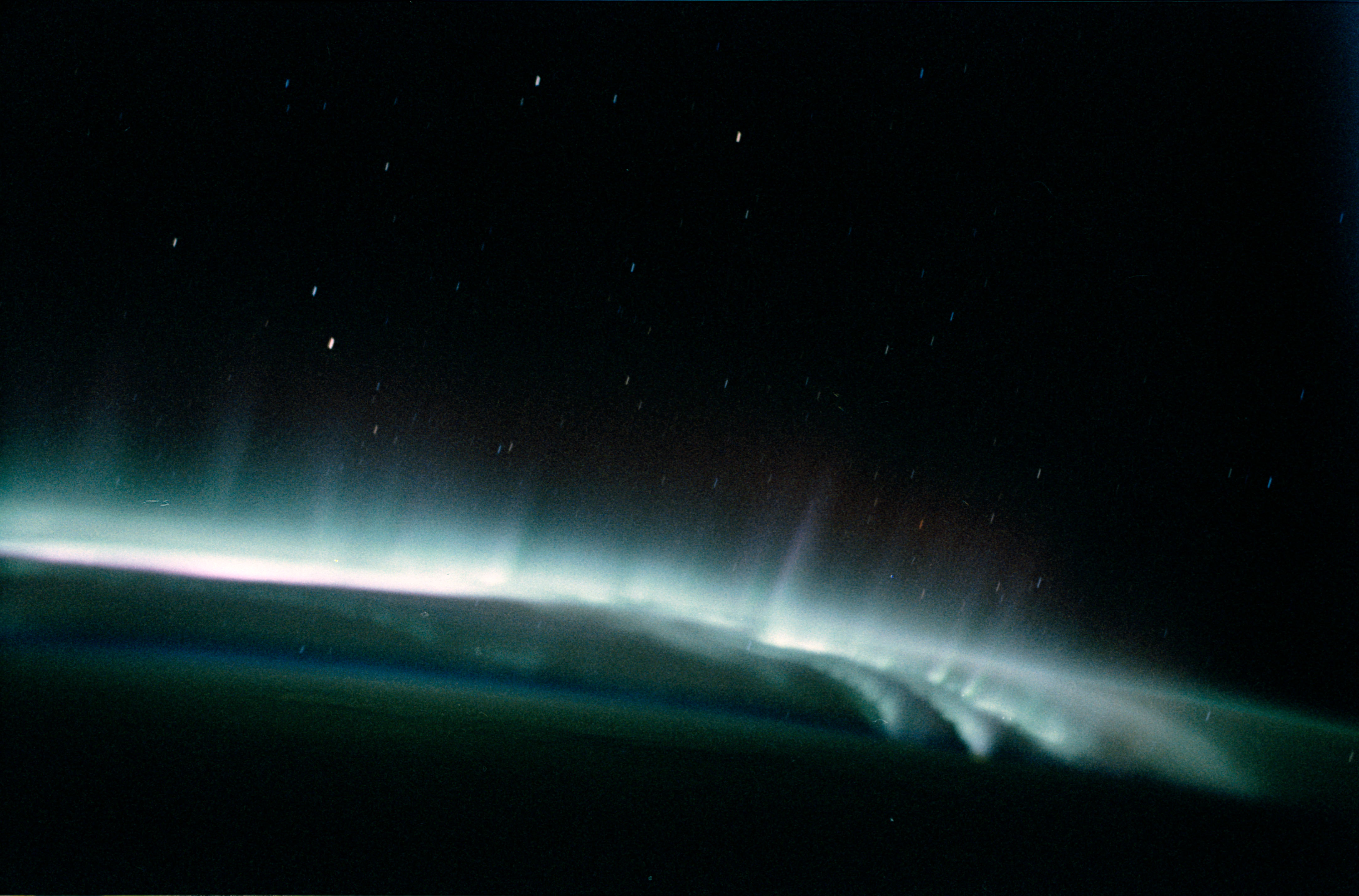
STS062-58-025 (4-18 March) --- This photo shows the aurora australis or souther lights. The multi-hued shafts of light, extending upward to 200 miles above the earth's surface, are caused by beams of energetic electrons colliding with the oxygen and nitrogen in the earth's upper atmosphere. The strong red glow occurs at the highest altitude where the air is least dense and composed mostly of oxygen. At lower altitudes, the greater density favors the green color, also produced by atomic oxygen. Sometimes at the bottom (the lowest altitude of the aurora) a pink border is produced by nitrogen. The aurora usually can be seen only in Arctic regions. However, because of the tilt of the magnetic axis of the space shuttle mission orbits. One of these regions is over eastern North American, and the second one is south of Australia. Since most shuttle launches occur in daytime, the North American region is in daylight, and the only auroras that can be seen are usually in the Southern Hemisphere.
Discover nebula-themed journey sites designed for peaceful observation.
Japan, Ogasawara
Stargazing Tour - Observe the best starry sky in Japan, Ogasawara!
ExploreNew Zealand
Small-Group Refined Experience - Stargazing English Tour in Tekapo | New Zealand
ExploreHawaii
Hawaii Big Island: Mauna Kea Stargazing Half-Day Tour with Transfer Service in Waikoloa, Kona, and Hilo
Explore
NASA often uses 'false color' techniques. Scientists map invisible wavelengths (like infrared) or specific gases to visible colors (red, green, blue) to highlight the nebula's structural details.
While some bright nebulas are visible with entry-level telescopes, capturing these stunning details usually requires deep-sky astrophotography equipment and long exposures.


